
Will I Still Love This in Five Years?
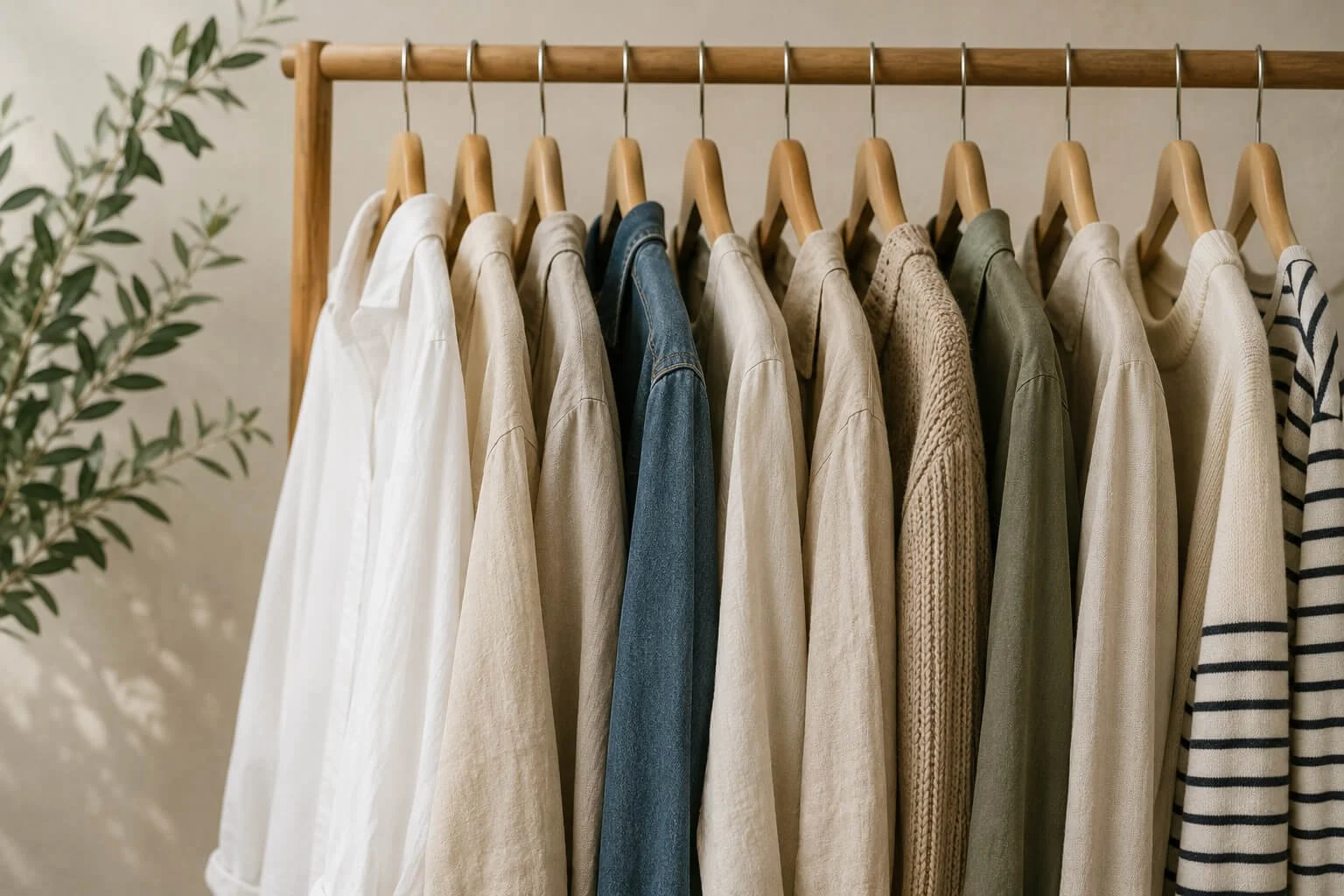
Lately, I've been going down the rabbit hole of natural fibres versus synthetics.
At first, it seemed simple.
Natural fibres good.
Polyester bad.
But the more I've read, the less straightforward it becomes.
I instinctively prefer linen, cotton and wool. They feel beautiful against the skin and I appreciate that they are renewable and biodegradable.
Yet conventional cotton farming has its own environmental challenges. Water use. Pesticides. Chemicals.
Then I look at brands like Patagonia, widely regarded as leaders in environmental responsibility, and discover many of their products are made from recycled polyester.
Suddenly, the conversation becomes much more nuanced.
Perhaps There Isn't a Perfect Fabric
Maybe the bigger issue isn't polyester versus cotton at all.
Perhaps the bigger issue is overconsumption and disposable fashion.
"The more I read, the less simple it seems."
What Really Changed My Thinking
I'll be the first to admit that I haven't always got this right.
I worked in fashion retail for many years and bought plenty of fast fashion myself. New arrivals, trends and seasonal collections were simply part of the culture.
But what really shifted my perspective came later, when I worked in retail and saw the sheer volume of products being created, wrapped in plastic, shipped around the world and sold.
Not because people needed them.
Simply because they were new.
Novelty products.
Decorative items.
Things designed to be replaced, forgotten or thrown away.
And people bought them. Lots of them.
I found myself wondering:
Do We Really Need All of This?
It wasn't one particular product or material that bothered me.
It was the scale of it all.
The mountains of packaging.
The endless cycle of producing more and consuming more.
And the relentless pressure to sell more.
Make more.
Buy more.
Out with the old.
In with the new.
I remember marking down products and promoting sales so customers felt they were getting a bargain. But often, the reality was much less exciting.
We simply needed to clear space.
Clear old stock.
Make room for the next collection.
The next season.
The next trend.
The next shipment of things that would eventually need to be moved on again.
Nothing was ever enough.
There was always pressure to grow.
To increase sales.
To launch something new.
To keep the cycle spinning.
And somewhere along the way, I started to wonder whether we had confused wanting with needing.
George Carlin Was Onto Something
About eight years ago, I watched George Carlin's famous skit about "stuff".
I laughed at the time, but the message stayed with me.
More recently, while reading James by Percival Everett, I smiled when one of the characters casually observed:
"White people love to buy stuff."
The line made me laugh because there is an uncomfortable truth hiding inside it.
Combined with Carlin's observations, it planted a question that I've found myself returning to over the years:
Do we really need all of this?
Not just clothing.
Everything.
The gifts.
The décor.
The novelty purchases.
The endless stream of trends and things designed to deliver a brief hit of excitement before the next thing comes along.
Maybe the problem isn't polyester.
Maybe it's our endless pursuit of more.
Even Patagonia Is Asking Difficult Questions
One thing that really challenged my assumptions was discovering Patagonia's film, The Monster in Our Closet.
Patagonia has built its reputation around environmental responsibility, yet many of its products are made from recycled polyester.
At first, that felt contradictory.
But rather than ignoring the issue, the company openly explores fashion's dependence on fossil fuels and the difficult trade-offs involved in creating durable, high-performance clothing.
The film highlights how synthetic fibres connect the fashion industry to the oil and gas industry, while also acknowledging that there are no easy answers.
Which brings me back to where I started.
Perhaps this isn't about finding the perfect fabric.
Perhaps it's about asking better questions.
If you're interested in this topic, I found Patagonia's film The Monster in Our Closet worth watching.
I Certainly Haven't Escaped It
I still enjoy fashion.
I still appreciate the excitement of something new.
And yes, I still buy things I later question.
I'm certainly not immune to trends, and I don't think perfection is the goal.
But these days, I'm trying to pause before I purchase.
Before I buy something new, I'm trying to ask:
Will I still love this in five years?
Is it well made?
Does it suit my lifestyle?
Am I buying it because I need it, or because I'm chasing that little dopamine hit that comes from something new?
Buy Less. Buy Better.
As a starting point, perhaps we don't need to have all the answers.
Perhaps we simply need to:
Buy less
Buy better
Use what we already own
Choose the right fabric for the garment's purpose
Wear things for longer
My raincoat is made from recycled polyester. It's a Macpac jacket that has (and will) last for years. It performs beautifully and hardly ever needs washing.
My cotton denim, merino wool and timeless wardrobe staples still have a place, too.
Maybe That's Enough
Maybe sustainability isn't about perfection.
Maybe it isn't about demonising one fibre and celebrating another.
Perhaps it's simply about becoming more conscious consumers.
Because before I buy something new, I'm trying to pause and ask one simple question:
Will I still love this in five years?
